

Spray Drying Machine Operation Guidelines
1. Preface
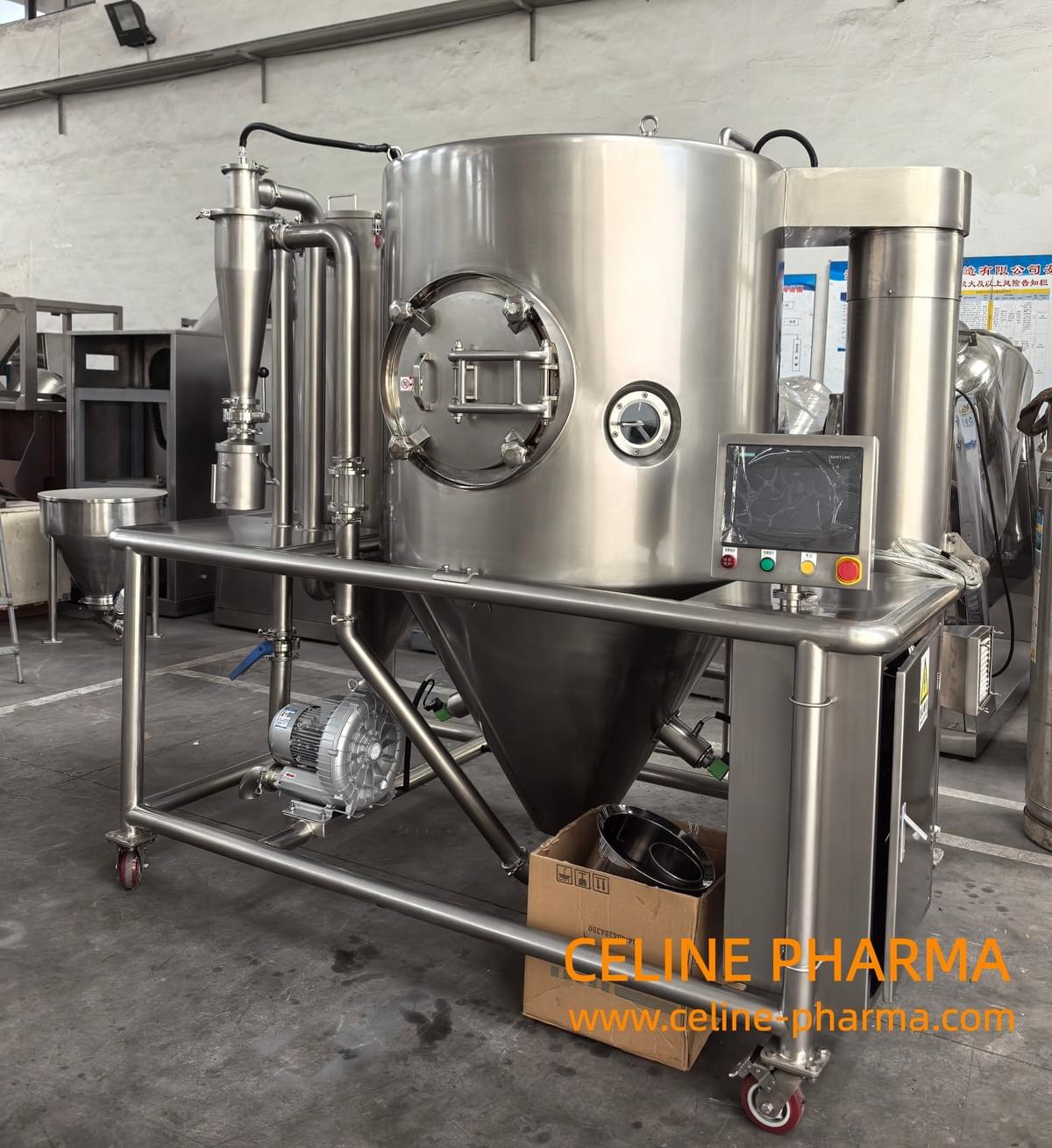
As the core production equipment for powder manufacturing in food, pharmaceutical, chemical and new material industries, spray dryers are widely applied in the solidification processing of liquid materials due to their advantages of rapid drying, uniform finished products and continuous production. The stable operation of equipment directly determines product quality, production efficiency and production cost. Standard daily inspection, regular maintenance and cleaning can effectively reduce equipment failure rate, extend service life, ensure batch product stability and eliminate potential safety hazards. This article comprehensively introduces the standardized maintenance system and safety operation specifications of spray dryers.
2. Shift Inspection and Daily Maintenance Specifications
2.1 Pre-startup Inspection
Complete full-system pre-inspection before startup to avoid operation with faults. Check all pipelines, valves and sealing accessories for air, material and liquid leakage, and confirm that gaskets of flanges and observation windows are intact with qualified sealing performance. Manually rotate fans, driving motors, atomizers, centrifugal discs and feed pumps to ensure smooth operation without jamming or abnormal friction noise. Clean impurities in feed filters and air filters to prevent unstable feeding and poor atomization caused by blockage. Verify that temperature, pressure, wind pressure, current and other instrument displays are normal, and the acousto-optic alarm device is sensitive and effective to ensure accurate and controllable control system.
2.2 In-operation Patrol Inspection
Carry out dynamic patrol inspection during operation and strictly control core process parameters. Real-time monitor inlet and outlet air temperatures in strict accordance with process standards to avoid material coking and high-temperature deformation and aging of the equipment shell. Continuously observe the atomization state; qualified atomization presents fine and uniform droplets without large splashes. Adjust feed rate, atomization speed and induced air pressure timely in case of material deviation, tower wall sticking and caking. Pay close attention to operation noise and vibration; reduce load and troubleshoot immediately if abnormality occurs to prevent damage to bearings, bases and transmission structures. Regularly check the drying tower inner wall, material collection system, cyclone separator and bag dust collector to ensure no large-area material accumulation and stable air pressure and differential pressure. Monitor the liquid level of the material tank in real time to prevent dry running of the feed pump.
2.3 Post-shutdown Cleaning
Post-shutdown cleaning is a key procedure to ensure product purity and long-term equipment stability, as well as a mandatory requirement for food, pharmaceutical and clean chemical production. Cool down the equipment completely before cleaning; never flush with water at high temperature to avoid cylinder deformation, insulation layer damage and pipeline cracking caused by thermal expansion and contraction. Fully disassemble and clean atomizers, nozzles, material pipelines and tanks to remove residual materials and prevent pipeline blockage. Thoroughly clean powder deposits inside the drying tower, hot air ducts, cyclone cylinders and collecting barrels to avoid mildew and cross-contamination. Clean bag and cartridge dust collectors by vibration, and replace blocked or damaged filter materials in a timely manner. For long-term shutdown, drain all residual materials and water in pipelines and cavities, and open hatch doors and observation windows for ventilation to prevent internal corrosion and mildew growth.
3.1 Daily and Weekly Basic Maintenance
Check the operation status of atomizer and fan bearings daily, and fill with special matching grease in accordance with the equipment manual; mixing different types of grease is prohibited to avoid lubrication failure. Fasten all connecting bolts and anchor screws weekly to eliminate looseness caused by long-term vibration. Check the tightness and appearance of transmission belts, and replace aged, cracked and loose belts to ensure stable transmission.
3.2 Monthly In-depth Maintenance
Disassemble and thoroughly clean nozzles, centrifugal atomizing discs and flow dividing discs monthly, check for wear and corrosion, and replace over-worn and deformed accessories to guarantee atomization accuracy. Overhaul the heating system, clean dust and impurities on heat exchangers and electric heating components to improve heat exchange efficiency and reduce energy consumption. Calibrate temperature, pressure, differential pressure and other detecting instruments to ensure accurate parameter detection and traceable production data. Inspect electrical circuits and terminals, remove dust, fasten loose connectors and eliminate aging hazards to ensure safe and stable electrical system operation.
3.3 Quarterly and Annual Overhaul Maintenance
Carry out full equipment overhaul quarterly and annually, disassemble and inspect fans, main shafts and core bearings, and replace worn and failed accessories timely. Check the status of stainless steel plates, anti-corrosion coatings and enamel layers on the inner wall of the drying tower, and repair corrosion and scratches to maintain cavity cleanliness and structural stability. Conduct full no-load linkage test run, fully verify equipment operation performance, process stability and safety protection functions, and eliminate hidden faults to ensure long-term stable mass production.
4. Special Maintenance Guidelines for Core Wearing Parts
4.1 Atomization System
The atomization system determines the quality of finished powder. As high-frequency wearing parts, nozzles must be disassembled and thoroughly cleaned after each batch of production. Long-term operation will cause nozzle aperture wear and expansion, resulting in uneven droplets, inconsistent powder particle size and wall sticking, so regular inspection and timely replacement are required. Keep the centrifugal atomizing disc clean without material accumulation to ensure dynamic balance and avoid severe vibration and abnormal noise caused by imbalance.
4.2 Dust Removal System
Filter bags and cartridges are core consumables of the dust removal system, affecting tower negative pressure and exhaust efficiency directly. Long-term use will cause filter blockage and reduced air permeability, leading to abnormal negative pressure, poor exhaust, reduced production capacity and dust leakage. Clean dust regularly and replace filter materials according to dust output to ensure unobstructed dust removal, stable equipment operation and clean production environment.
4.3 Sealing Components
Sealing strips and gaskets on tower doors, observation windows, atomizer shaft ends and pipeline flanges are prone to aging, hardening, cracking and air/dust leakage due to long-term high temperature, vibration and air flow. Check sealing parts regularly and replace failed accessories timely to stabilize the tower internal negative pressure, eliminate dust leakage and hot air loss, and ensure production efficiency and workshop cleanliness.
5. Safety Operation and Maintenance Prohibitions
First, when processing organic solvents and flammable and explosive materials, strictly control the drying temperature, maintain smooth negative pressure exhaust, and prohibit open fire and static sparks in the production area. Second, cut off the total power and lock with warning signs before internal cleaning, disassembly and maintenance; it is forbidden to open access doors or reach into the tower during operation to avoid mechanical injury. Third, conduct full-line deep cleaning before switching different materials to completely remove residues and avoid cross-contamination. Fourth, abide by the maintenance cycle strictly; prohibit faulty operation and over-parameter operation to reduce equipment failure and quality risks from the source.
6. Conclusion
The efficient, stable and safe operation of spray dryers relies on standardized and normalized daily inspection, cleaning and periodic maintenance. A scientific maintenance system can effectively extend equipment service life, reduce operation and maintenance costs, improve production efficiency, and continuously guarantee the stability of powder particle size, moisture content and purity, meeting the high-standard production and GMP compliance requirements of food, pharmaceutical and fine chemical industries. Standardized maintenance and refined management are the key to long-term stable equipment operation and enterprise quality and efficiency improvement.