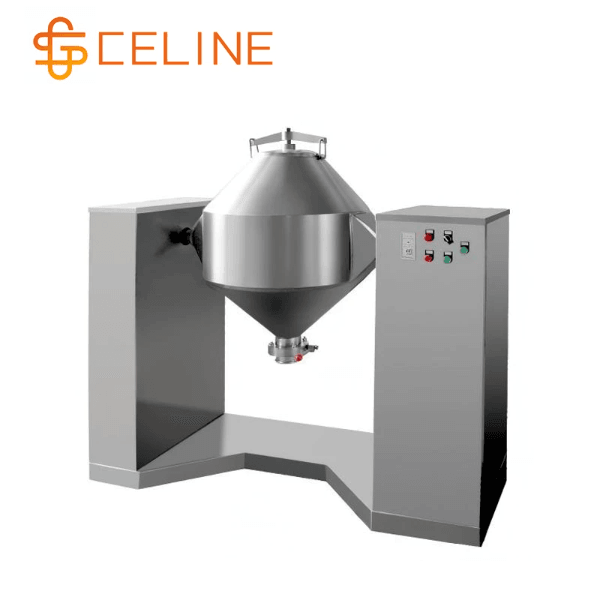


Common faults and solutions for double cone mixers are as follows:
Uneven Mixing
- Causes: Inappropriate rotation speed; both too fast or too slow speeds can lead to poor mixing results; unstable feeding speed, fluctuating speeds can cause uneven distribution of materials in the drum; defects in the double cone design, such as inappropriate inner wall roughness or unreasonable cone angle.
- Solutions: Adjust the appropriate rotation speed according to material characteristics and process requirements; install a speed control device or flow controller to ensure stable feeding speed; treat the inner wall of the double cone, such as polishing or adding a liner, and optimize the cone angle design.
Material Sticking to The Wall
- Causes: The material itself is sticky, such as containing sugar or oil; the inner wall of the double cone has high roughness, making it easy for materials to adhere; improper temperature control of the double cone, both too high or too low temperatures can increase material viscosity.
- Solutions: For sticky materials, add an appropriate amount of lubricant or dispersant before mixing; polish the inner wall to reduce surface roughness; control the heating or cooling temperature of the double cone reasonably according to the material characteristics.
Poor Discharge
- Causes: The double cone inclination angle is too small, causing the material to flow slowly under gravity; unreasonable discharge port design, such as too small diameter or irregular shape; material characteristics, such as large particle size, high humidity, and strong viscosity.
- Solutions: Appropriately increase the inclination angle of the double cone, generally between 10°-30°; modify the discharge port, enlarge the diameter or optimize the shape, such as using a circular or flared shape; pre-treat the material, such as screening, drying, or adding flow aids.
Excessive Equipment Vibration
- Causes: Unbalanced rotating parts, such as eccentric installation or uneven wear of the mixing shaft and impeller; unreasonable foundation design, such as unstable foundation or inadequate vibration damping measures; installation problems, such as uneven equipment installation or loose anchor bolts.
- Solutions: Perform dynamic balancing testing and adjustment on rotating parts, and replace severely worn parts; redesign the foundation to increase its weight and rigidity, and install vibration damping pads or shock absorbers; reinstall and adjust the equipment using a level, and tighten the anchor bolts.
Transmission Component Failure
- Causes: Gear wear in the gearbox; after long-term use, the gear teeth surfaces may experience wear and pitting, leading to reduced transmission accuracy and increased noise; loose or broken belts or chains; due to prolonged use or improper installation, belts or chains may become loose, worn, or even break.
- Solutions: Regularly inspect the wear of the gearbox gears and replace severely worn gears promptly; adjust the tension of the belts or chains, and replace severely worn or broken belts or chains immediately.
Seal Leakage
- Causes: Aging or damage of seals; after long-term use, seals may age, harden, or crack, leading to reduced sealing performance; improper installation; if seals are not installed correctly or properly, it can also lead to leakage.
- Solutions: Regularly replace seals, choosing reliable and wear-resistant seals; install seals according to the correct installation method, ensuring proper installation without deformation or twisting.